
C9, C7 and Mini Lights: Choosing a Roofline Look
A plain guide to bulb types, color temperature and spacing — so you can picture the result before anyone quotes it.
Call or text (707) 343-4469 Get a Free Quote
- Veteran owned
- Family run
- Napa local
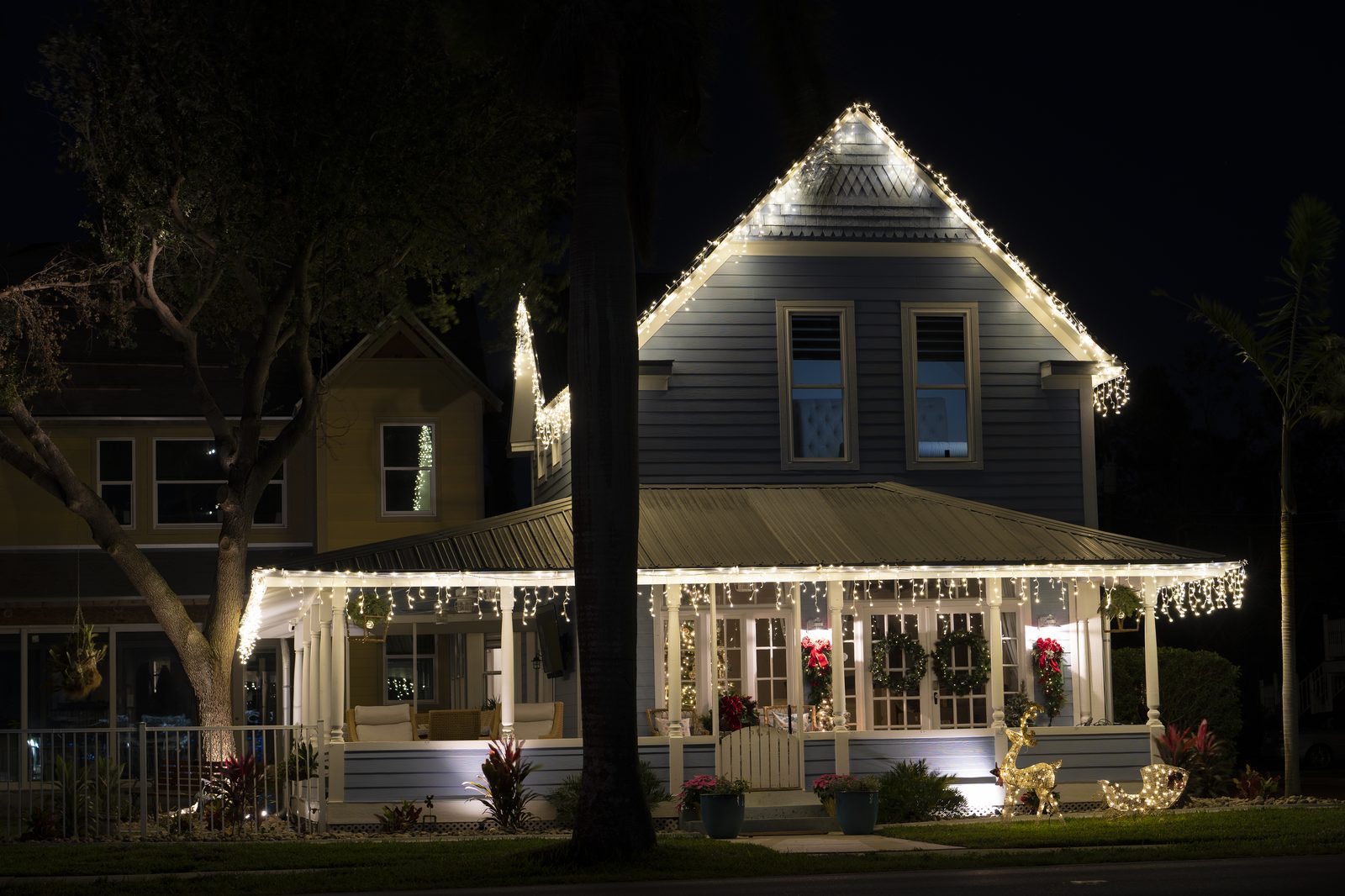
Almost every question about how a display will look comes down to three choices: which bulb, which color, and how far apart. Get those right and a modest budget looks expensive. Get them wrong and a large budget looks cluttered.
The bulb shapes
- C9 — the classic. The big strawberry-shaped bulb, about 2½ inches tall. This is the traditional American roofline look and what we use as standard. Individually visible from the street, warm, and unmistakably deliberate. Best on longer rooflines and larger homes.
- C7 — the smaller sibling. Roughly two-thirds the size. Reads more delicate, suits cottages, smaller village homes and detail runs around porches and dormers. Slightly closer spacing to keep the line continuous.
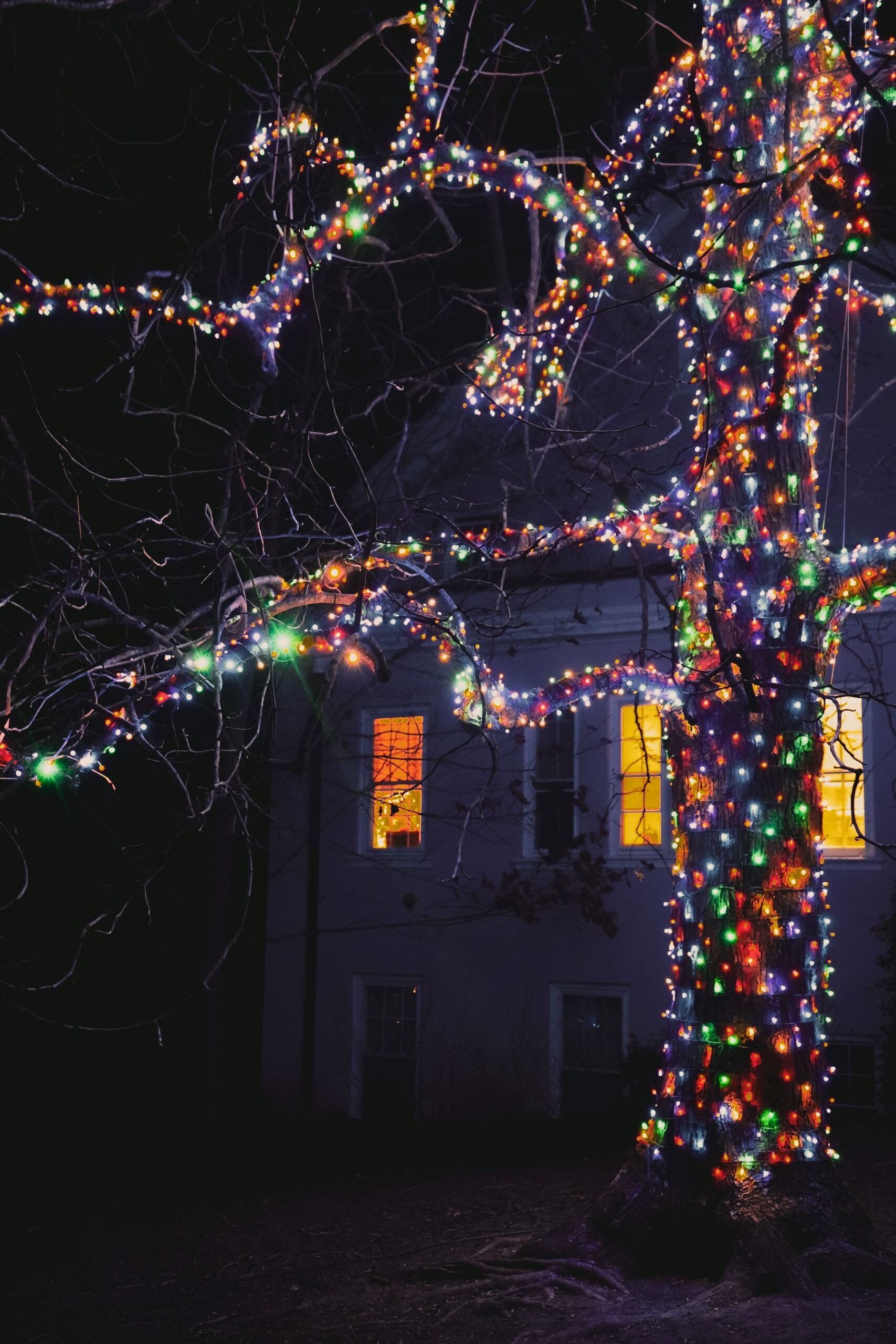
- Mini lights. Small and dense, best for wrapping — trunks, columns, railings, garland and hedges. Wrong for a roofline, where they read as a fuzzy glow instead of a line, but the right answer for almost everything vertical.
- Bistro and catenary. Larger spaced bulbs on heavier cable strung overhead across a courtyard or terrace. Hospitality lighting, not roofline lighting.
Color temperature — the choice people underestimate
This matters more than bulb shape, and it is where most DIY displays go wrong.
- Warm white (about 2400–2700K). Soft, slightly amber, closest to the old incandescent look. This is the default we recommend for wine country because it flatters stucco, stone and timber and photographs beautifully at dusk. It is also what reads as expensive rather than festive.
- Pure or cool white (3500K and up). Crisper and more contemporary, and it can look striking on modern architecture. On warm-toned stucco it can go slightly blue and clinical.
- Color. Traditional multicolor, or single-color schemes. Genuinely fun, and right for some houses and most families with young children. Just commit — half multicolor and half warm white is the one combination that never works.
- The mixing rule. Never mix color temperatures on a single elevation. Two batches of “warm white” from different manufacturers will not match, and the eye catches it instantly from the street.
Spacing
C9 bulbs are typically set at 12-inch spacing, which is the standard for a reason: it reads as a continuous line of distinct points from the street. Tighter spacing at 8 inches gives a denser, more luxurious line and costs proportionally more. Wider spacing at 15 inches saves money and starts to look sparse on a long run.
C7 usually goes at 8 to 12 inches, because the smaller bulb needs to be closer to hold the line.
The practical takeaway: if a quote seems low for your linear footage, ask what spacing it assumes.
Why LED, not incandescent
- Power. C9 LED draws about one watt per bulb; incandescent C9 draws seven to ten. A 200-bulb roofline is 200 watts against roughly 1,600 — the difference between running a couple of light bulbs and running a space heater.
- Heat. LEDs run cool. Incandescent bulbs get genuinely hot, which matters when they sit against dry landscaping in a region that thinks hard about fire.
- Circuit capacity. With LED you can run a whole house on a single exterior circuit. With incandescent you are splitting circuits and often finding you need more power than the house has.
- Lifespan. LEDs last many seasons. Incandescent filaments fail constantly, and on a series run one failure takes a whole leg dark.
A simple way to choose
- Traditional home, longer roofline, want it to look established: C9, warm white, 12-inch spacing.
- Cottage, village home or lots of fine trim: C7, warm white, 8 to 12-inch spacing, with mini lights on porch posts.
- Modern architecture, clean lines: C9 in pure white — the cleanest line on a contemporary roofline.
- Family house, kids, want it fun: multicolor C9 on the roofline, warm white minis in the trees so it still reads as designed.
- Winery or hospitality: warm white throughout, C9 on buildings, minis on trunks, bistro over terraces.
📞 Call or text (707) 343-4469 and we will walk your roofline and show you what each option looks like on your house. Get a Free Quote
Common questions
What is the difference between C9 and C7?
Which color temperature should I choose?
Can I mix warm white and color?
Why does my neighbor’s white look different from mine?
Is tighter spacing worth the extra cost?
Do LEDs look artificial compared to old incandescent lights?
Can I use mini lights on a roofline?