
Residential Christmas Light Installation in Napa
Custom-cut rooflines, wrapped trees, columns and walkways — designed, installed, maintained through the season, then taken down and stored in January.
Call or text (707) 343-4469 Get a Free Quote
- Veteran owned
- Family run
- Napa local
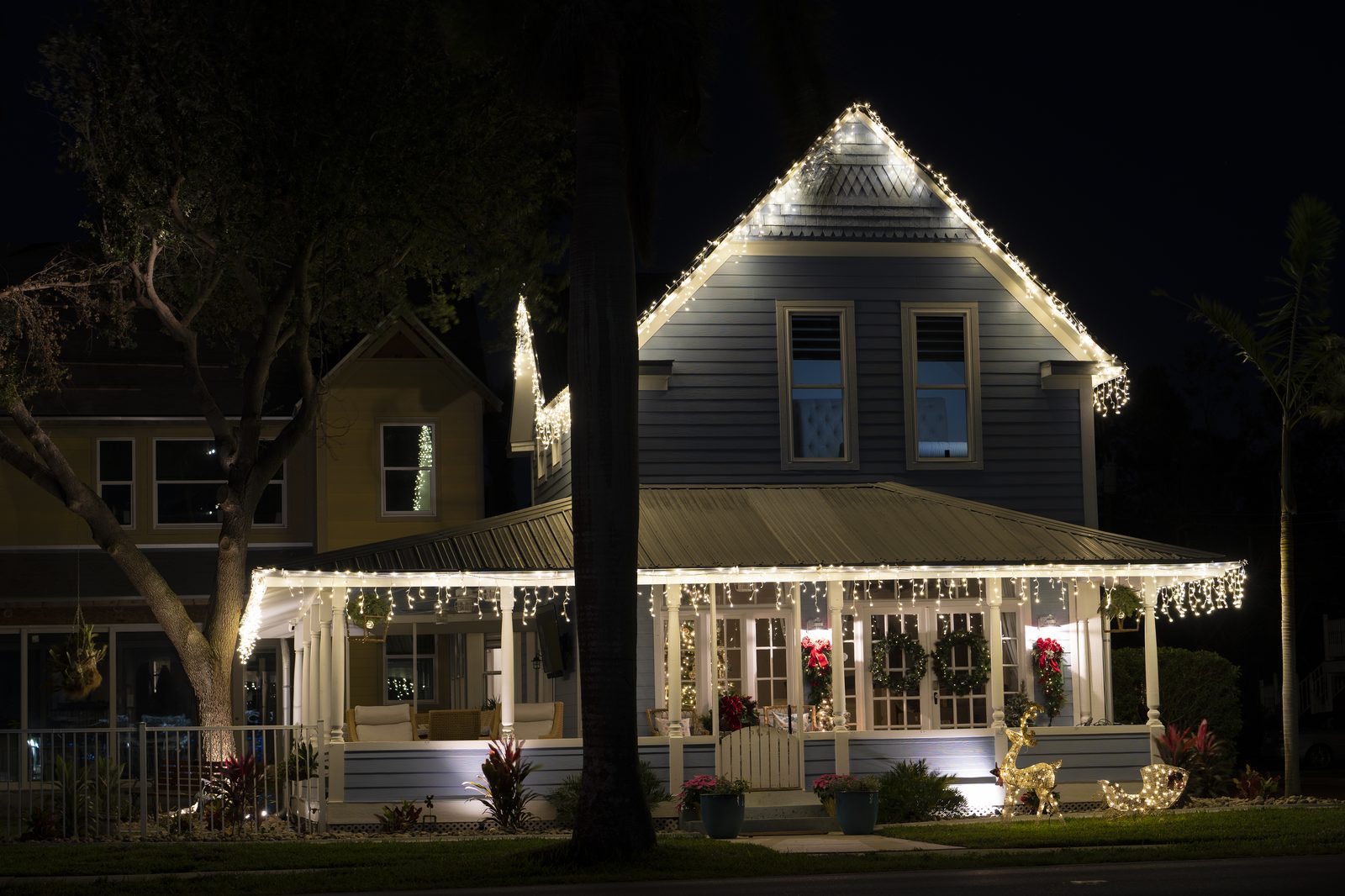
A residential holiday lighting job is really three jobs. There’s the design — deciding what actually deserves to be lit on your particular house. There’s the install — getting it up cleanly, safely and in a way that survives eight weeks of Napa Valley winter. And there’s everything after: the run that goes dark the week of your party, and the January morning when somebody has to get back up the ladder in the rain. Most homeowners who call a professional have been burned by the third part, not the first.
We handle all three as one seasonal package. You get a walkthrough and a firm written price, a custom-cut installation on the date you booked, in-season service if anything fails, and full takedown and storage after the holidays. The lighting itself is ours — you are not buying inventory or finding shelf space for it in July.
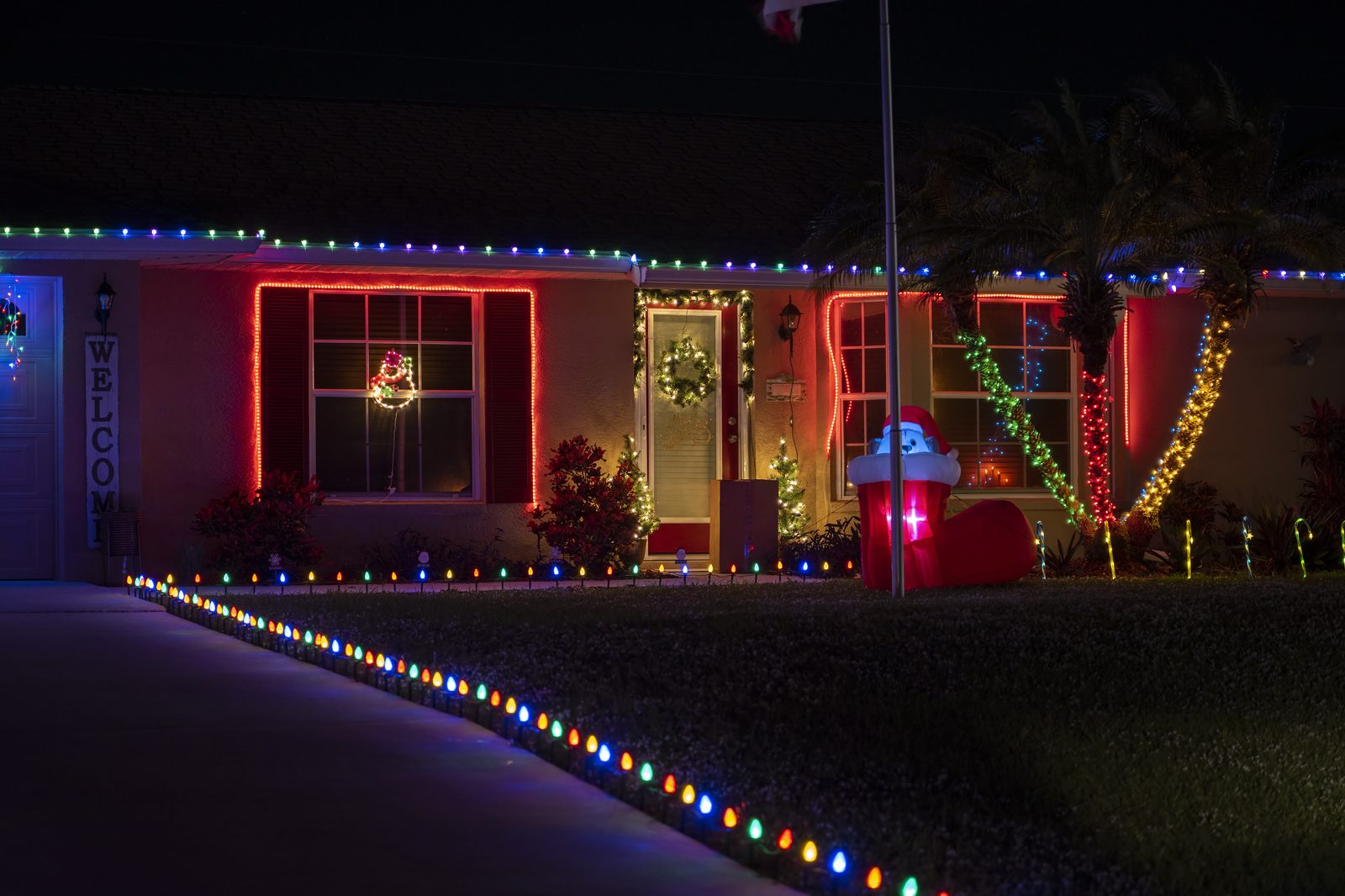
What we light on a typical Napa home
Most homes start with the roofline and grow from there. The roofline is what reads from the street and what makes a house look finished; everything else is depth.
- Primary rooflines and peaks. C9 LED bulbs on custom-cut socket wire, clipped along the gutter line or shingle edge in an unbroken run. This is the backbone of nearly every display.
- Secondary rooflines, dormers and porch lines. Where the architecture steps, lighting the steps is what separates a designed display from an outline.
- Columns, posts and entry surrounds. Wrapped in mini-lights or garland, this is the part guests actually stand next to.
- Wrapped trees and trunks. Olive, oak and ornamental trees take light beautifully. Trunk wraps and canopy work add the most visual weight per dollar of anything we install.
- Walkways, hedges and driveway edges. Low-level lighting that makes the approach feel intentional and, incidentally, makes the walk to your door safer in the dark.
- Wreaths, garland and window accents. Hung, secured and powered properly rather than hooked over a nail.
The Valley Bright Install
Every residential job runs the same five steps, whether it is a single-story front roofline or a full estate frontage.
- 1. Walkthrough and design. We measure the roofline in linear feet, look at the roof and fascia surfaces, find the exterior outlets and talk through what is worth lighting. You get a firm written price before anything is cut or ordered — no allowances, no surprises on install day.
- 2. Custom cut and bench-tested. Socket wire is cut to your measurements, bulbs are seated, and the whole run is powered up and tested before it ever comes to your house. Finding a dead socket on the bench takes a minute; finding it at the top of a ladder in December costs an hour.
- 3. Installation day. Most homes take a few hours. Clips are matched to each surface, connections are sealed and drip-looped, and a photocell timer is set so the display comes on at dusk and shuts off late evening without you touching anything.
- 4. In-season watch. If a section fails between install and New Year, call or text and we come fix it. That is included in the price, not a service call.
- 5. January takedown and storage. We pull everything down, label it by section, and store it. Your garage stays empty and next season starts with a phone call.
📞 Call or text (707) 343-4469 for a free Napa Valley quote. Get a Free Quote
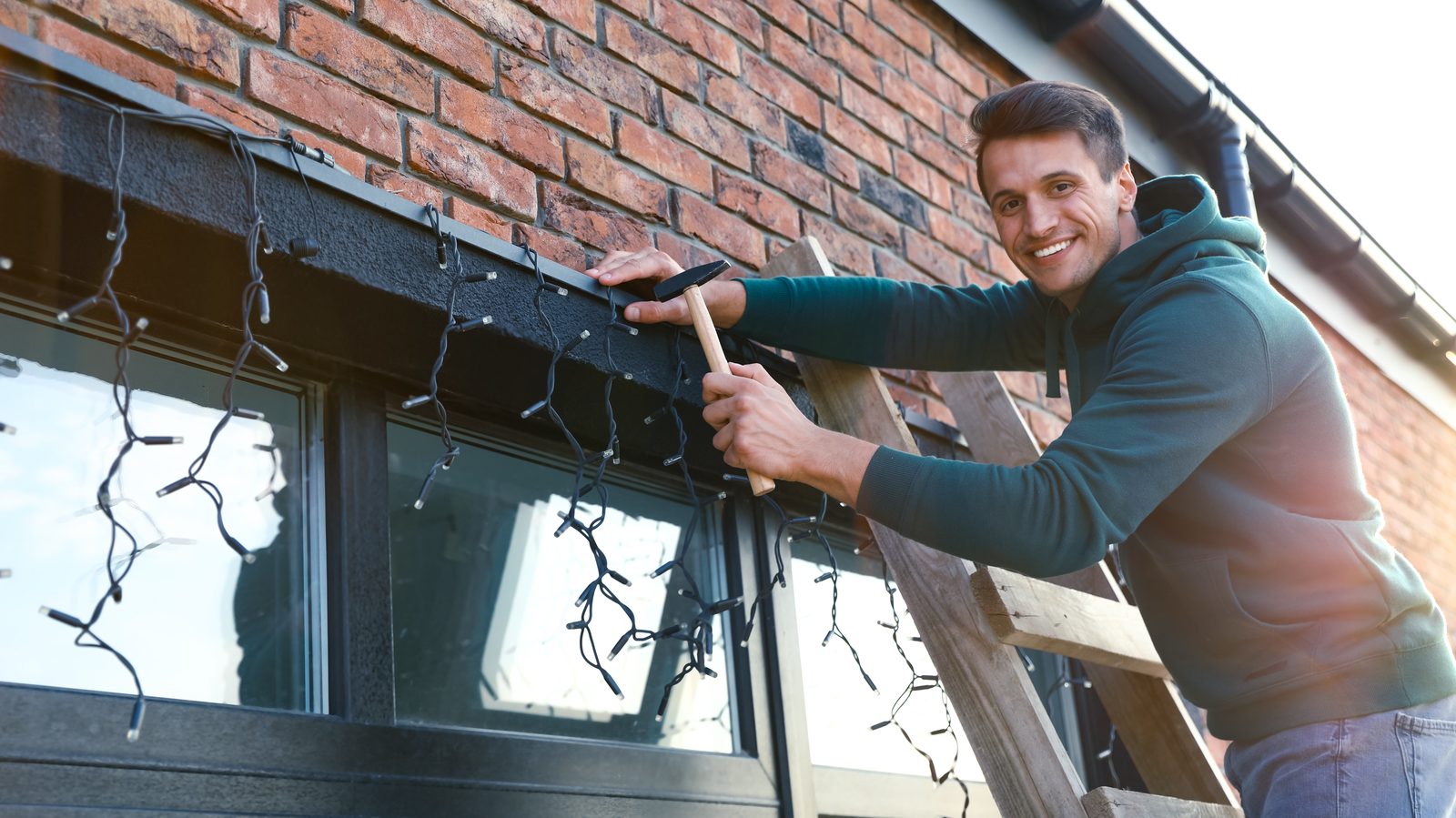
Tile, shingle, fascia: how we attach to your house
Nothing about a correct install involves nails, staples or screws. Every attachment is a clip chosen for the surface it grips, and every clip comes off with the lights in January.
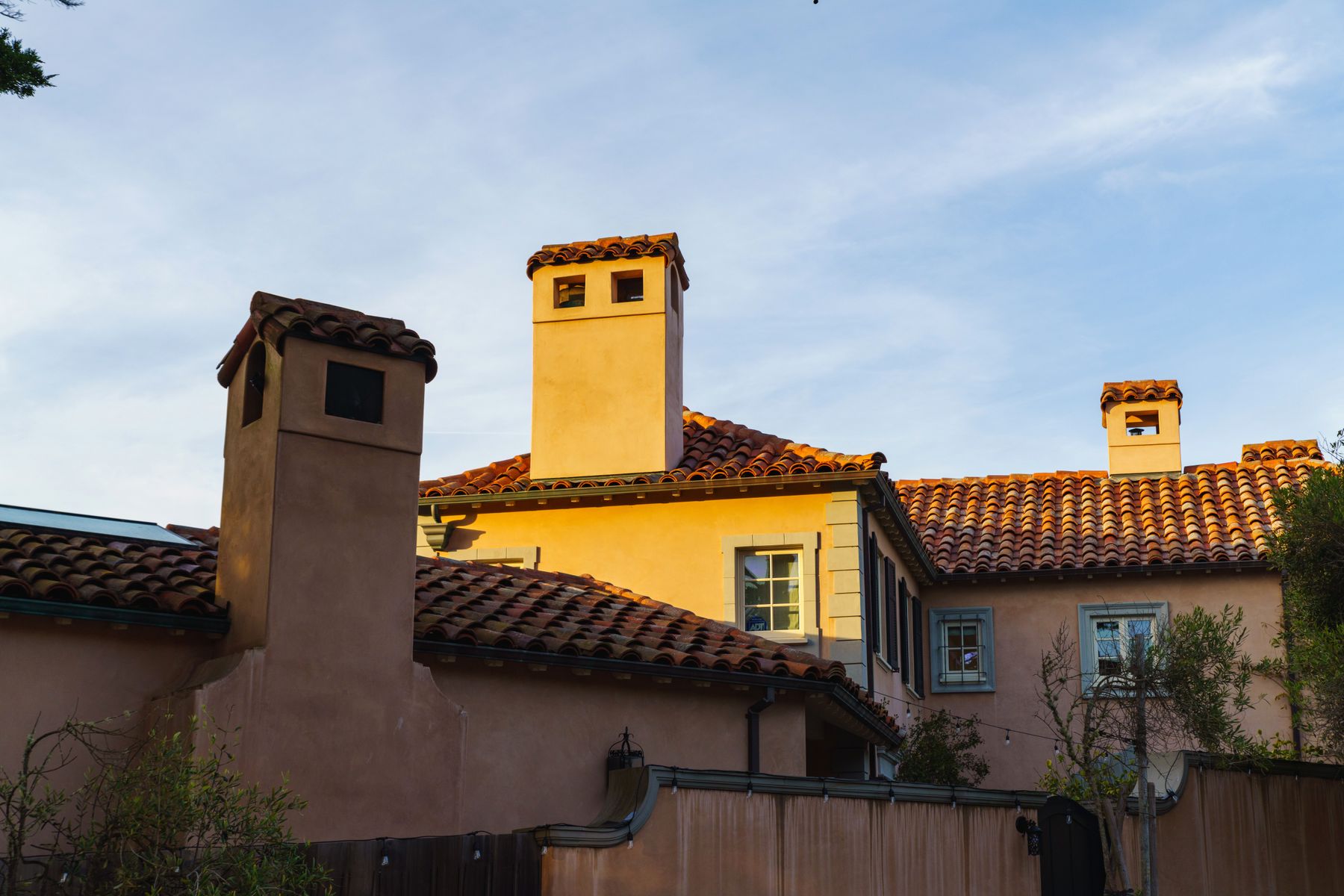
Clay and concrete tile
Common through the city of Napa, Yountville and much of American Canyon, and the surface that causes the most damage claims in this trade up and down the valley. Tile cracks under body weight, and a cracked tile is a leak path that surfaces in the first heavy February storm — long after the lights are gone and nobody connects the two. We install tile homes entirely from the perimeter using gutter-line clips, or tile clips gripping the edge course where there is no gutter. We do not walk the tile field, and we will not quote a run that requires it.
Composition shingle
The most straightforward surface. Shingle-tab clips slide under the edge course and hold the socket wire in a clean line without lifting or damaging the shingle.
Gutters and fascia
Gutter clips hook the outer lip and are the workhorse of most installs. Where there is no gutter, fascia clips grip the board edge. Neither pierces anything.
Stucco, stone and columns
Wrapped rather than fastened. Wine-country homes carry a lot of stucco and stone frontage, and the answer is almost always to light the architecture around it rather than attach to it.
Why commercial-grade C9 LED, not retail sets
The lighting we install is not what you can buy in a seasonal aisle, and the difference matters more in a wet Napa December than it would somewhere dry.
- Custom-cut socket wire. Bulbs are spaced evenly along a wire cut to your roofline. Retail sets come in fixed lengths, which is why DIY runs double up in one place and go dark in another.
- Weather-rated sockets and heavy-gauge wire. Built for outdoor winter service across many seasons rather than one.
- Sealed connections with drip loops. The single most common cause of a display dying mid-December is water finding a connection and tripping the GFCI. Correct weatherproofing is why our runs stay lit through the storms.
- Low power draw. C9 LED bulbs draw roughly a watt each, so a whole house typically runs on a single exterior circuit and costs a few dollars a month to run.
- Consistent color. Bulbs come from the same lot, so warm white actually looks like one warm white across the whole roofline instead of three slightly different ones.
How we protect your home
- We won’t walk clay or concrete tile roofs, or quote runs that require walking them.
- Nothing is nailed, stapled or screwed into your house. Every attachment is a clip sized for that surface, removed with the lights in January.
- We supply the lighting rather than installing sets you bought. That’s what lets us guarantee the whole display and service it free all season.
- If a section can’t be reached safely, we’ll say so at the walkthrough and redesign that budget. Trees, columns and entries usually look better than an unreachable ridgeline anyway.
- We walk the property before quoting. Linear footage and roof surface decide the price, and neither is visible from an aerial photo — so the number you get is the number you pay.
What residential installation costs
Price is driven by linear footage first, then height and access, then how much beyond the roofline you want lit. A single-story ranch with 140 feet of front roofline and a two-story home with 260 feet of wraparound are genuinely different jobs.
| Scope | Typical seasonal range | Notes |
|---|---|---|
| Single-story, front roofline | $600 – $1,200 | Roughly 120–200 linear feet, ladder-accessible |
| Two-story or wraparound roofline | $1,100 – $2,400 | Multiple rooflines, peaks and dormers; more setup time |
| Roofline plus trees and landscape | $1,800 – $3,500 | Adds wrapped trunks, columns, hedges and walkway runs |
| Estate frontage, full display | $3,000 – $5,000+ | Large linear footage plus significant landscape lighting |
These are typical ranges for Napa Valley properties, not a quote or an offer. Your firm price comes after we look at the property.
Every range above includes the same things: design, the lighting itself, installation, in-season service, and January takedown and storage. There is no separate removal fee and no charge to come back out if something fails.
Booking and the season calendar
Holiday lighting is a compressed trade. Installs run from mid-October to mid-December, and the last two weeks of November fill first because everyone wants their lights on for Thanksgiving weekend. Booking in September or early October gets you the date you want. December calls get whatever is left, and by mid-December it is usually nothing.
Takedown runs through January, weather permitting. You do not need to be home for either visit as long as we have exterior access.
Common questions
How long does installation take?
Most homes are a few hours. Larger properties with landscape lighting can take most of a day. Because everything is cut and tested beforehand, install day is mostly hanging and weatherproofing.
Do I have to be home?
Only for the walkthrough. After that we need exterior access and a working outdoor outlet.
Who owns the lights?
We do. Your price covers use of the lighting for the season plus all the service around it. Nothing to store, nothing to replace when a set fails in year three.
What if a run goes dark in the middle of December?
Call or text and we come out. In-season service is included. Most failures are a water-intruded connection or a single bad bulb, and both are quick fixes.
Will this damage my roof, gutters or paint?
No. Every attachment is a removable clip sized for the surface. Nothing pierces the building envelope, and on tile roofs we never set foot on the tile.
Can you match a design I saw somewhere?
Usually. Bring a photo to the walkthrough. Most of what makes a display look expensive is even spacing, consistent color temperature and lighting the architecture rather than everything at once.
What about the electricity bill?
Negligible. C9 LED bulbs draw about a watt apiece, so a typical roofline running six hours a night costs a few dollars for the season.
Do you install on rentals or for property managers?
Yes, with owner authorization. We need permission from whoever is responsible for the building exterior before we attach anything.
📞 Call or text (707) 343-4469 to book your walkthrough. Get a Free Quote